

What is the working principle of a car seat belt? How does it protect passengers?
What is the working principle of a car seat belt? How does it protect passengers?
The car seat belt is an important device for ensuring the safety of drivers and passengers. Its working principle and the way it protects passengers are mainly as follows:
working principle
Normal working state of the retractor: The core component of a car seat belt is the retractor. During normal vehicle operation, the spool in the retractor, under the action of the spring, allows the seat belt to extend and retract freely, facilitating passengers to adjust the position of the seat belt to maintain a comfortable seating position. At this time, the ratchet mechanism is connected to the spool, and the spring is in a certain pre-tensioned state, but it does not exert too much resistance to the extension and retraction of the seat belt, allowing passengers to easily pull out or return the seat belt.
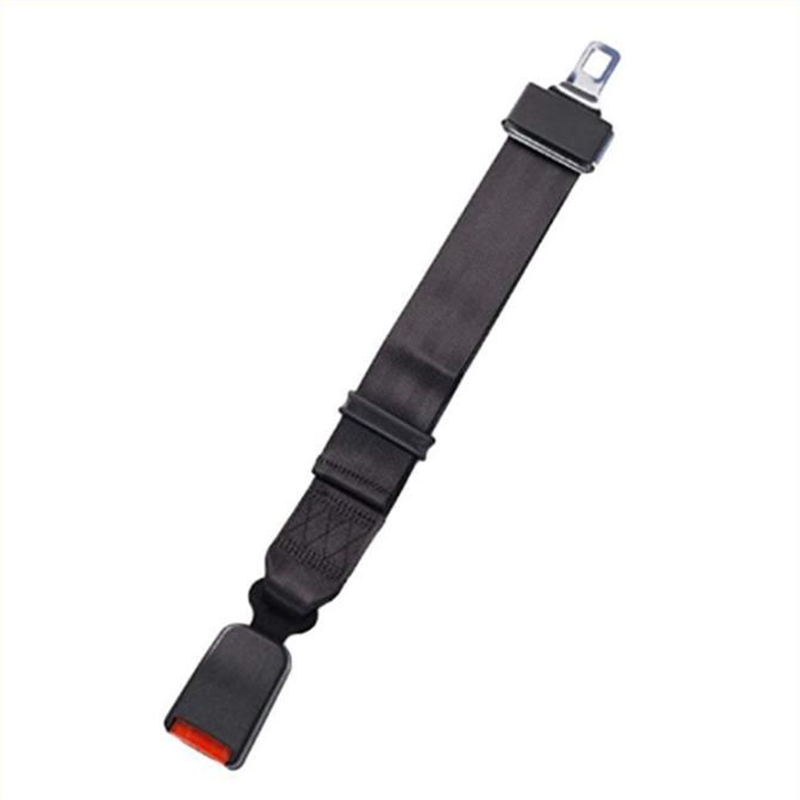
Locking mechanism during collision
Inertia locking: When a vehicle is involved in a collision or brakes suddenly, the vehicle's speed changes rapidly, generating significant acceleration. The inertia-sensitive components in the retractor, such as pendulums or balls, will move due to the effect of inertia. When the acceleration reaches a certain threshold, the inertia-sensitive components will trigger the locking mechanism, stopping the ratchet wheel from rotating, thereby locking the spool and preventing the seat belt from being further pulled out. This secures the passenger in their seat, preventing them from being injured by forward momentum.
Webbing locking: Some seat belts are also equipped with a webbing locking function. When the vehicle rolls over or undergoes other violent movements, the webbing of the seat belt will suddenly accelerate. At this time, the centrifugal sensor in the retractor will detect the high-speed withdrawal of the webbing, and through the effect of centrifugal force, the locking mechanism will act to lock the webbing, preventing passengers from violently swaying inside the vehicle.
Ways to protect passengers
Limiting displacement: At the moment of vehicle collision, the seat belt can quickly secure the passenger in the seat, greatly limiting the passenger's body displacement. This prevents the passenger from directly colliding with hard components inside the vehicle, such as the steering wheel, dashboard, and windshield, thereby reducing injuries to important parts such as the head, chest, and abdomen.
Dispersing Impact Force: When a vehicle collision generates impact force, the seat belt evenly distributes the force onto the passenger's body. Typically, the seat belt diagonally crosses the passenger's shoulders and chest, as well as horizontally across the waist, spreading the impact force over a larger contact area. This reduces the force per unit area, thereby mitigating localized body injuries.
Buffering function: Some seat belt systems also feature pre-tensioning and force limiting functions. The pre-tensioner quickly tightens the seat belt at the beginning of a collision, eliminating the gap between the seat belt and the passenger's body, ensuring the passenger is more tightly fitted to the seat. The force limiter, on the other hand, will appropriately loosen the seat belt after it has withstood a certain amount of tension, in order to control the force acting on the passenger's body and prevent secondary injury caused by excessive tension in the seat belt, thus achieving a buffering effect.
Send Inquiry



X
We use cookies to offer you a better browsing experience, analyze site traffic and personalize content. By using this site, you agree to our use of cookies.
Privacy Policy