

What Is the Service Life of Automobile Safety Belts? Beyond
What Is the Service Life of Automobile Safety Belts? Beyond This Period, the Protective Effect May Be Greatly Reduced!
Automobile safety belts are the most important safety equipment in vehicles, but many car owners ignore a key problem: safety belts also have a service life. Just like other auto parts, safety belts will age and wear over time, and their performance will gradually decline. When the service life is exceeded, the protective effect of the safety belt may be greatly reduced, and it may even fail in critical moments, endangering the safety of the occupant. This article will detail the service life of automobile safety belts, explain why the protective effect will decline after exceeding the service life, and remind car owners to replace the safety belt in time to ensure driving safety.
First of all, it is clear that the service life of automobile safety belts is not unlimited. According to the standards of international safety organizations and automobile manufacturers, the service life of automobile safety belts is usually 5-10 years. This service life is calculated from the date of the car’s leaving the factory, not from the date of use. For example, if a car leaves the factory in 2020, the service life of its safety belt will expire between 2025 and 2030. It should be noted that the service life of safety belts of different brands and models may be slightly different, which is usually marked in the car’s manual or on the safety belt webbing. Car owners can check the service life of their car’s safety belt according to the manual or the mark on the webbing.
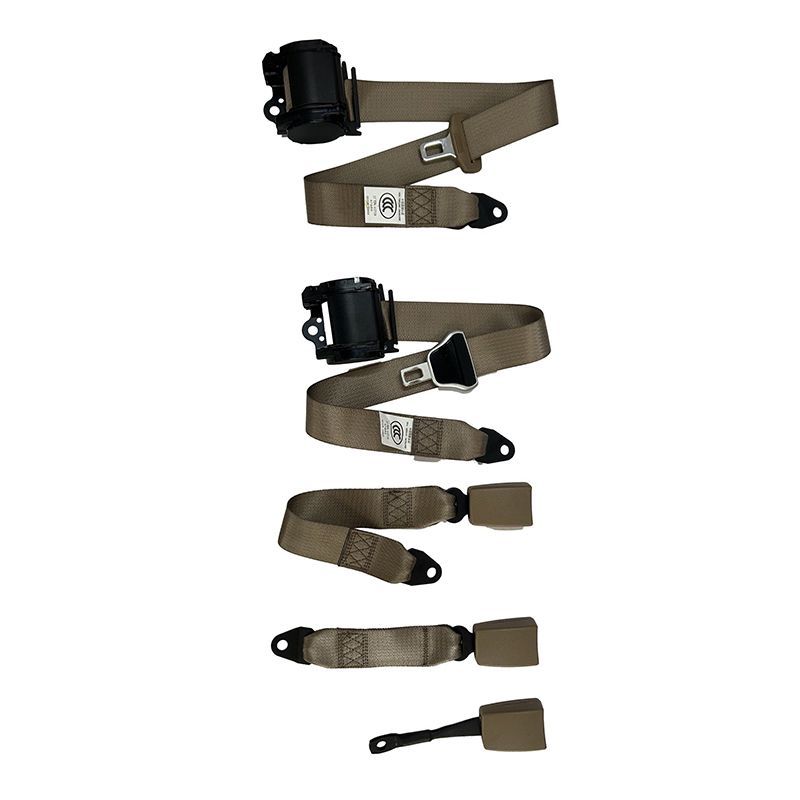
Why does the service life of automobile safety belts be limited to 5-10 years? The main reason is that the safety belt will be affected by various factors during use, leading to aging and performance degradation of its components.
1. Aging of the webbing: The webbing of the safety belt is made of polyester fiber or nylon fiber, which will age due to sunlight, high temperature, humidity, and chemical substances (such as engine oil, detergent) during use. The aged webbing will become brittle, its tensile strength will decrease, and it may break when subjected to impact force. For example, after long-term exposure to sunlight, the webbing will fade and become brittle, and the tensile strength may decrease by 30%-50% compared with the new webbing.
2. Wear and failure of the retractor: The retractor is the core component of the safety belt, which is composed of a spool, centrifugal clutch, torsion bar, and other parts. During use, the retractor will be worn due to repeated retraction and locking, and the lubricating oil inside will dry up, leading to increased friction between the components. The worn retractor may have problems such as unsmooth retraction, delayed locking, or failure to lock, which will affect the protective effect of the safety belt. For example, if the retractor fails to lock in time in the event of a crash, the safety belt will not be able to "hold on" the occupant, leading to injury.
3. Aging of the buckle: The buckle of the safety belt is equipped with a spring and a locking mechanism, which will age and wear over time. The aged buckle may have problems such as loose locking, difficulty in releasing, or failure to lock, which will affect the normal use of the safety belt. For example, if the buckle cannot be locked firmly, the safety belt will loosen during driving, and the occupant may be thrown forward in the event of sudden braking.
4. Aging of the force limiter and pre-tensioner: The force limiter and pre-tensioner are important components to improve the protective effect of the safety belt. The torsion bar of the force limiter will fatigue and deform after long-term use, and the performance will decline; the pre-tensioner’s explosive device or gas generator will also age over time, leading to failure to work normally in critical moments.
It is worth noting that even if the car is rarely used, the safety belt will still age over time. Because the aging of the safety belt is not only caused by use but also by the natural aging of materials. For example, even if the car is parked in a garage for a long time, the webbing will still age due to the influence of temperature and humidity, and the components of the retractor and buckle will also age naturally. Therefore, car owners cannot think that the safety belt is still usable because the car is rarely used.
What should car owners do when the safety belt exceeds its service life? The answer is simple: replace the safety belt in time. It is recommended that car owners check the service life of the safety belt regularly (at least once a year), and if the service life is exceeded, they should go to a professional auto repair shop or the car’s 4S shop to replace the safety belt. When replacing the safety belt, it is necessary to choose original or certified products to ensure that the performance of the new safety belt meets the standards. In addition, if the safety belt is damaged (such as webbing breakage, retractor failure, buckle damage) or has been subjected to a severe crash, it should also be replaced immediately, regardless of whether it has exceeded the service life.
Many car owners may have such a misunderstanding: as long as the safety belt looks intact, it can be used continuously. In fact, the aging of the safety belt is internal and cannot be judged by the appearance alone. The webbing may look intact, but its internal fibers have been brittle, and the tensile strength has been greatly reduced; the retractor may retract smoothly, but its locking mechanism has been worn and may fail in critical moments. Therefore, judging whether the safety belt can be used only by appearance is very dangerous.
In conclusion, the service life of automobile safety belts is usually 5-10 years. Beyond this period, the webbing, retractor, buckle, and other components of the safety belt will age and wear, and the protective effect may be greatly reduced. Car owners should pay enough attention to this, check the service life of the safety belt regularly, and replace the safety belt in time to ensure that the safety belt can play an effective protective role in critical moments, protecting the safety of themselves and their families.
Remember: a safety belt that exceeds its service life is like a "time bomb" in the car. Replacing the safety belt in time is the basic responsibility for your own safety and the safety of your family.
Send Inquiry



X
We use cookies to offer you a better browsing experience, analyze site traffic and personalize content. By using this site, you agree to our use of cookies.
Privacy Policy