

What is the delivery lead time of the seat belt manufacturer? How can they ensure timely delivery?
What is the delivery lead time of the seat belt manufacturer? How can they ensure timely delivery?
The delivery cycle of seat belt manufacturers may vary due to various factors. Here are some common scenarios: Regular orders: For regular seat belt orders with standard specifications and models, and if the manufacturer has a certain inventory reserve, the delivery cycle may typically be around 7-15 days. For example, for some common three-point car seat belts or ordinary high-altitude work safety belts, the manufacturer may complete production and shipping preparation within one week.
Customized orders: For customized orders with special requirements, such as specific colors, materials, specifications, or seat belts with particular logos, the delivery cycle may be extended to 15-30 days or even longer. This is because such orders require additional time for product design, mold making, raw material procurement, and other related tasks. For example, customizing seat belts with a specific company's logo and special features for a particular enterprise may take 20-30 days to deliver.
Urgent Orders: In emergency situations, such as when customers urgently need seat belts for urgent projects or unexpected situations, manufacturers may offer expedited services. However, the delivery timeframe may vary depending on the manufacturer's production capacity and resource allocation. Generally, the delivery timeframe for urgent orders may range from 1 to 7 days, but this requires the manufacturer to have sufficient flexibility and emergency response mechanisms in place to ensure timely delivery.
Seat belt manufacturers typically adopt the following measures to ensure timely delivery: comprehensive production planning and order management review: Before accepting an order, conduct a detailed and comprehensive review of the order, including technical feasibility, resource requirements, risk assessment, etc., to ensure that the company can meet customer requirements.
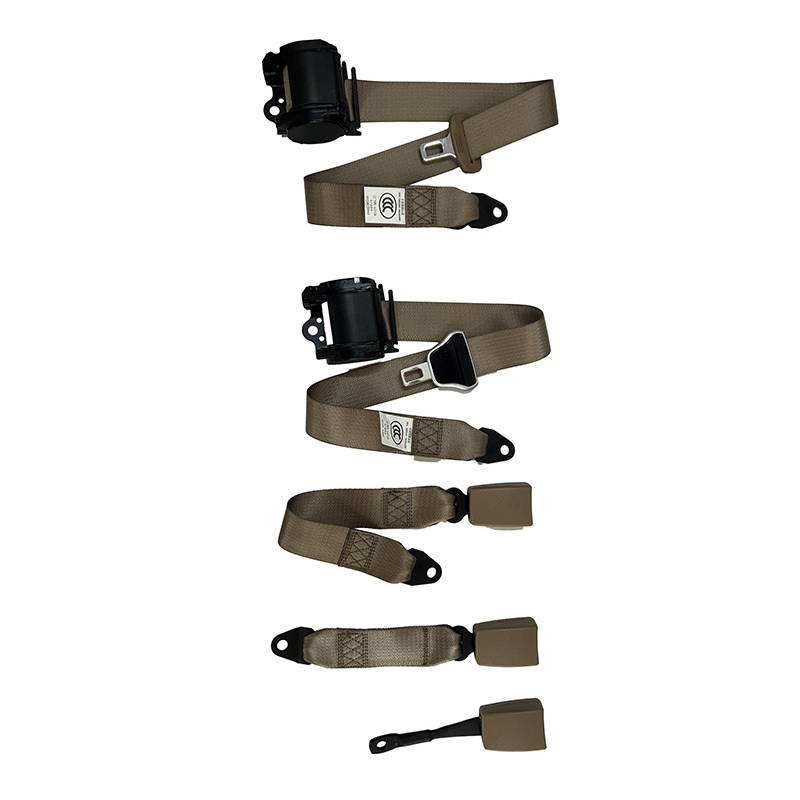
Production scheduling: Based on the delivery date and production difficulty of orders, develop a detailed production plan, rationally arrange production tasks and resources such as equipment and personnel, and clarify the time nodes for each production step.
Progress Tracking: Establish a production progress tracking mechanism to monitor the production process in real-time, promptly identify and resolve issues arising during production, and ensure that production proceeds as planned. In the event of delays, promptly adjust the plan and take remedial measures.
High-quality supplier management and supplier selection: Select high-quality and reliable raw material suppliers, establish long-term and stable cooperative relationships with them, and ensure the quality and supply stability of raw materials.
Inventory management: Reasonably control the inventory of raw materials to avoid production interruptions caused by raw material shortages. At the same time, negotiate with suppliers to establish an emergency supply mechanism to quickly obtain additional raw materials in special circumstances.
Efficient production processes and equipment maintenance optimize production processes: Continuously improve production techniques and processes, enhance production efficiency, and reduce production time and costs. For instance, adopt automated production equipment and advanced production technology to increase the automation level and production speed of production.
Equipment maintenance: Regularly maintain and upkeep production equipment to ensure its normal operation and reduce production delays caused by equipment malfunctions. Establish an emergency response mechanism for equipment failures to promptly handle sudden equipment malfunctions and restore production as soon as possible.
Establishment of strict quality control standards: Establish strict product quality standards to ensure that the produced seat belts meet relevant national standards and industry requirements. During the production process, strengthen quality inspection and control, conducting rigorous quality testing from raw material procurement to production and processing, to prevent rework and delays caused by quality issues.
Quality issue handling: If any quality issues are identified, prompt measures should be taken to address them, ensuring that the product meets quality standards before delivery. Additionally, analyze and summarize the quality issues, implement improvement measures, and prevent similar issues from recurring.
Effective communication and coordination mechanism Internal communication: Strengthen communication and coordination among various departments within the enterprise, including sales, production, procurement, quality control, etc., to ensure timely and accurate information transmission. All departments should closely cooperate to jointly solve problems that arise during the production process.
Customer communication: Maintain good communication with customers, provide timely feedback on the production progress and delivery status of orders, and communicate and negotiate with customers in advance to seek solutions in case of any issues that may affect delivery.
Send Inquiry



X
We use cookies to offer you a better browsing experience, analyze site traffic and personalize content. By using this site, you agree to our use of cookies.
Privacy Policy