

Under global competition, where does the supply chain advantage of Chinese seat belt manufacturers lie?
Under global competition, where does the supply chain advantage of Chinese seat belt manufacturers lie?
Against the backdrop of the restructuring of the global automotive parts supply chain and intensified competition, Chinese seat belt manufacturers have evolved from early learning and catching up to competing with multinational giants today. Their competitiveness is not only reflected in cost and scale, but also in the establishment of a complete, efficient, agile, and resilient localized supply chain system, forming a unique comprehensive advantage.
The most significant advantage lies in the complete and highly clustered local supply chain network. China boasts a complete industrial chain ranging from basic raw materials (such as high-performance polyester fibers, special steel), precision components (lock cores, mold springs, micro-motors), to electronic components and chemical materials (ignition powder, engineering plastics). A seat belt manufacturer located in the Yangtze River Delta or Pearl River Delta can find almost all primary, secondary, and even tertiary suppliers within a radius of several hundred kilometers. This high degree of geographical agglomeration greatly reduces logistics and communication costs, and accelerates collaborative research and development as well as problem response speed. For example, mold modification and prototype trial production can be completed in a very short time, which is an efficiency unmatched by overseas supply chains.
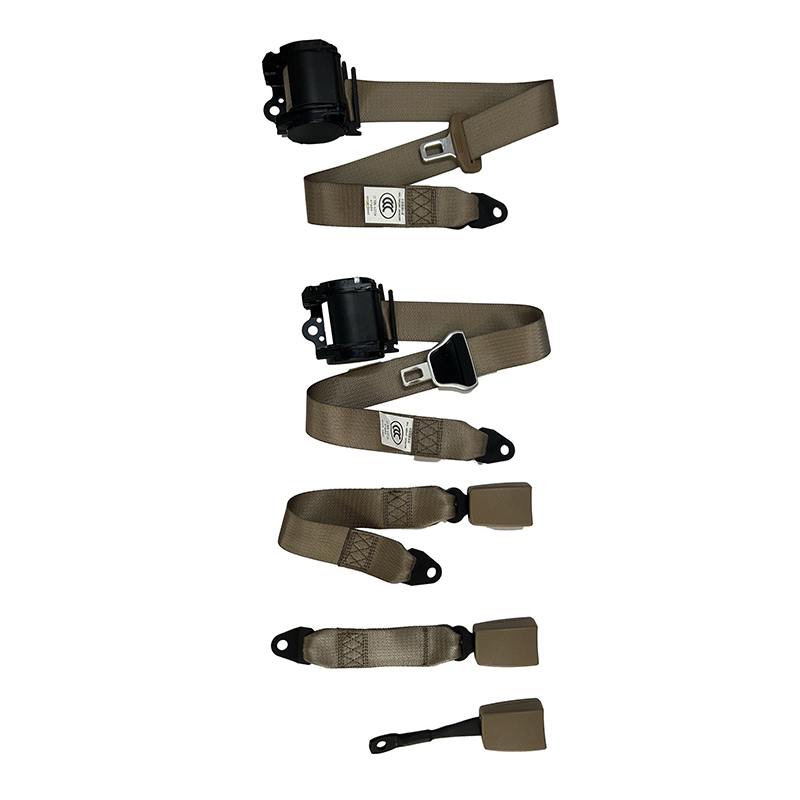
Cost control and rapid response capability under large-scale manufacturing are another core advantage. Relying on China's vast automotive market and mature industrial workforce, Chinese seat belt manufacturers have reached advanced levels in automated production and lean management, achieving economies of scale. This enables them to offer highly competitive prices while ensuring quality. More importantly, this manufacturing capability is highly flexible. It can flexibly respond to fluctuations in orders from original equipment manufacturers (OEMs), configuration changes, and the new trend of "small batches, multiple varieties". The "quick response" capability of the Chinese supply chain can better align with the rapid iteration pace of domestic OEM products, with a shorter cycle from receiving change requests to achieving mass supply.
The location advantage of being close to core markets and deep collaborative R&D. China is the world's largest automobile producer and consumer. Chinese seat belt manufacturers have formed a close symbiotic relationship with local OEMs (original equipment manufacturers), including traditional brands and new automotive forces. They can send engineers to reside at the OEMs and participate in the entire process from concept design to mass production, achieving "zero-distance" synchronous engineering. This deep binding enables the seat belt system to more accurately adapt to vehicle model requirements and quickly translate the special requirements of the Chinese market (such as optimization for the latest version of C-NCAP regulations) into product features. At the same time, facing the wave of electrification and intelligence led by China, local suppliers have an advantage in response speed and can develop new products that meet the needs of new energy vehicle platforms (high-voltage safety, lightweight) and intelligent cockpits more quickly.
The resilience and self-controllability of supply chains have become increasingly important in recent years. The uncertainty in the global trade environment has underscored the value of supply chain security. Chinese seat belt manufacturers generally have a high localization rate in their supply chains, and they are gradually achieving self-controllability in key materials and technologies, which reduces the risk of supply disruptions caused by geopolitical factors or unexpected events. At the same time, leading Chinese manufacturers are also implementing a "in China, for the world" strategy, establishing research and development centers and production bases in China to serve joint ventures of global OEMs in China. Leveraging their cost and technological advantages, they are also exporting to overseas markets in reverse, entering the global supply systems of international mainstream brands. This supply chain system, which is both broad and deep, from the inside out, provides a solid foundation for Chinese seat belt manufacturers to participate in global competition.
Send Inquiry



X
We use cookies to offer you a better browsing experience, analyze site traffic and personalize content. By using this site, you agree to our use of cookies.
Privacy Policy