

Facing Vehicle Intelligence, What Forward-Looking Layouts Are Seatbelt Manufacturers Undertaking?
Facing Vehicle Intelligence, What Forward-Looking Layouts Are Seatbelt Manufacturers Undertaking?
The wave of vehicle intelligence is redefining the functionality and user experience of automobiles. As a core component of traditional passive safety, the automotive seatbelt is evolving from a simple mechanical restraint device into an intelligent, integrated, and proactive safety interaction terminal. Leading seatbelt manufacturers are no longer solely focused on "tightening during a crash." Instead, they are undertaking a series of forward-looking layouts centered around perception, warning, interaction, and coordinated protection.
One core direction of this layout is deep integration into the vehicle's active safety and warning systems. Seatbelt manufacturers are developing intelligent seatbelts that integrate deeply with the vehicle's environmental perception systems (radar, cameras). For example, when the vehicle's AEB (Automatic Emergency Braking) or FCW (Forward Collision Warning) system identifies a high-risk situation, the seatbelt can not only gently pretension using a reversible pretensioner to remove slack and alert the occupant, but more advanced systems can also preemptively adjust the load limiting threshold and pretensioning strategy based on the predicted collision type and severity, making optimal preparations for an imminent real collision. In future Level 3 and above autonomous driving scenarios, the seatbelt needs to work in conjunction with the in-cabin monitoring system to determine whether the occupant is in the correct posture to take over driving, and provide haptic (vibration, tension) and audible alerts.
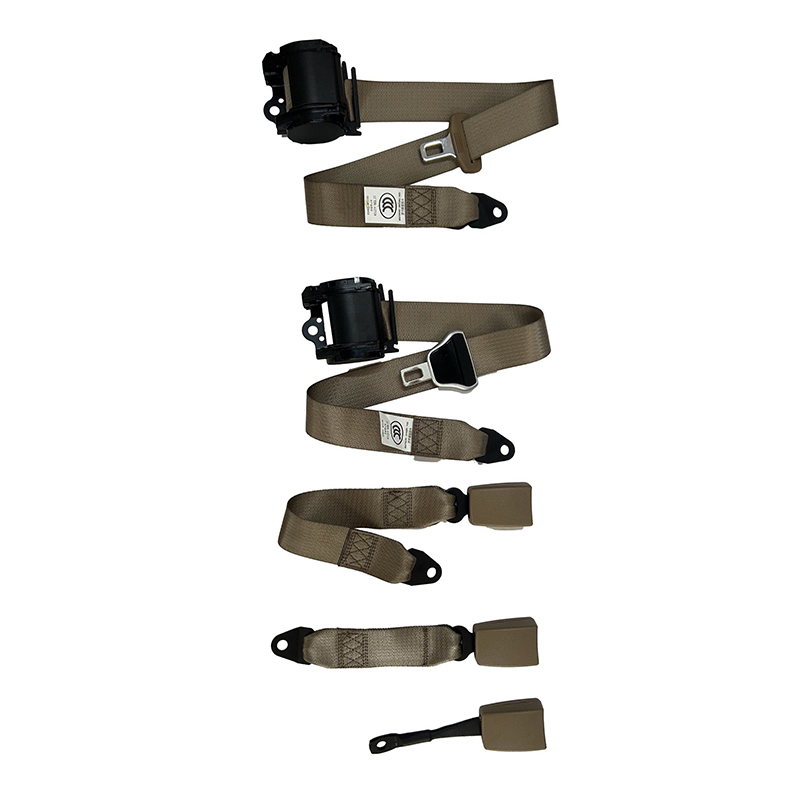
Integrating health and status monitoring functions into the seatbelt is another area full of potential. Utilizing flexible electronics technology and micro-sensors, seatbelt manufacturers are exploring the integration of vital sign monitoring modules into the webbing or the buckle latch. By unobtrusively collecting physiological signals such as the driver's heart rate, respiratory rate, and galvanic skin response during daily use, these signals can be used for advanced fatigue driving monitoring, potentially offering better accuracy and reliability than camera-based solutions. Going a step further, the system can also monitor sudden health events (such as cardiac distress) and automatically trigger an emergency call. This technology will also make seatbelts an important part of child occupant safety monitoring, checking their breathing status or issuing an alert if they are left behind in the vehicle.
To address the changes in cabin space and occupant posture brought about by autonomous driving, seatbelt manufacturers are also conducting pre-research on concept products. In the era of fully autonomous driving, occupants may need to swivel seats, recline, or even lie flat to rest. Traditional three-point seatbelts will no longer provide effective restraint. Therefore, four-point seatbelts, integrated seatbelts that move in sync with swiveling seats, and even "wrap-around" restraint systems that deploy from seats or interior panels like an airbag when needed, have all become R&D topics. These systems require an extremely high balance between reliability and comfort, and may be integrated with seat climate control and massage functions.
Furthermore, driving product evolution through a closed-loop data feedback loop has become a key focus of forward-looking layouts. Future intelligent seatbelts may become a data acquisition node. Under the premise of anonymization and compliance with privacy regulations, they can collect data from real-world (non-crash) emergency braking or minor collisions, such as webbing force and pretensioner actuation status. This vast amount of real-world data, fed back to seatbelt manufacturers and OEMs, can be used to continuously optimize algorithms, improve simulation models, and ultimately enable OTA (Over-The-Air) capabilities for safety systems. In summary, seatbelt manufacturers are transforming from "hardware manufacturers" into "intelligent safety solution providers," and their products will become a key link in the "life perception and guardian network" of future intelligent vehicles.
Send Inquiry



X
We use cookies to offer you a better browsing experience, analyze site traffic and personalize content. By using this site, you agree to our use of cookies.
Privacy Policy