

How Do Mainstream Domestic Seatbelt Manufacturers Differ in Their Pretensioner and Load Limiter Technical Routes?
How Do Mainstream Domestic Seatbelt Manufacturers Differ in Their Pretensioner and Load Limiter Technical Routes?
The pretensioner and load limiter technology is the core of automotive seatbelt systems, directly determining the effectiveness of occupant restraint and the level of protection during a collision. Mainstream domestic seatbelt manufacturers share common fundamental principles in their technical routes, but also exhibit differentiated competitive landscapes in specific implementation paths, technical emphases, and integration strategies. These differences primarily revolve around the actuation method of the pretensioner and the control logic of the load limiter.
Regarding pretensioner technology, the main approaches are pyrotechnic (explosive) type and electric (motor-driven) type. Most mainstream domestic manufacturers have mastered both technologies simultaneously, but their application strategies differ. The pyrotechnic pretensioner features mature technology, low cost, high actuation force, and extremely fast response speed (millisecond level), making it the mainstream choice for low- and mid-priced vehicles. The competition among manufacturers centers on the stability of the ignition charge, precise control of actuation timing, and long-term reliability. The electric pretensioner, on the other hand, represents the trend toward intelligence. It retracts the webbing through a motor-driven gear mechanism. Its advantages lie in reversibility (capable of repeated actions), precise control over pretension force magnitude and speed, and easier integration into the vehicle's intelligent warning systems (such as linkage with Automatic Emergency Braking). Some technologically leading manufacturers are now integrating the electric pretensioner with the seatbelt motor retractor (used for convenience entry functions) into a single, compact design to optimize cost and packaging space.
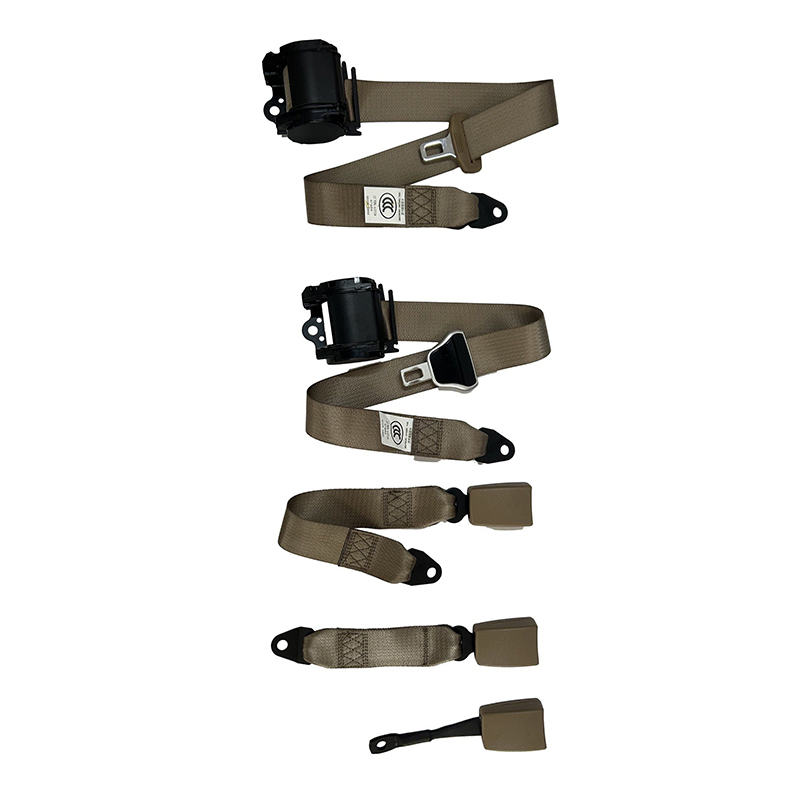
The differentiation in load limiting technology is even more pronounced, mainly reflected in the diversity and adjustability of the load limiting methods. The basic and widely used technology is the torsion bar load limiter, which releases energy through plastic torsion of a steel torsion bar of specific specifications when overloaded. Different manufacturers have their own proprietary techniques in the material heat treatment process and cross-sectional shape design of the torsion bar to achieve a smoother and more stable force-displacement curve. More advanced technologies include multi-stage load limiting or adaptive load limiting. One approach involves incorporating tear-type load limiting plates or variable cross-section rods into the system to achieve stepwise changes in force levels during a collision. An even more cutting-edge technology is electronic load limiting (also known as "active load limiting"). It uses sensors to detect collision severity and occupant characteristics, and an electronic control unit instructs the load limiting mechanism (such as an adjustable damper) to adjust the load limiting level in real time. Currently, top-tier domestic manufacturers possess the capability to mass-produce multi-stage load limiting systems and are actively researching electronic load limiting technology.
The choice of technical route ultimately serves system integration optimization and cost control. Some manufacturers emphasize the ultimate reliability and cost advantage of "fully mechanical" solutions, focusing on optimizing the classic combination of pyrotechnic pretensioner and torsion bar load limiter. Others invest heavily in "mechatronics," deeply integrating the motor-driven pretensioner, sensors, and electronic control unit, positioning it as the actuation terminal for future intelligent cockpits. Furthermore, in terms of lightweighting and miniaturization of the seatbelt assembly, different manufacturers have different priorities, such as using higher-strength webbing to reduce the retractor volume, or optimizing the design of the buckle and guide loop to reduce overall weight. These differences reflect each manufacturer's judgment on technology trends, their own R&D strengths, and the diverse needs of their OEM customers. The ultimate competition is a comprehensive battle of balancing system performance, reliability, cost, and lightweighting.
Send Inquiry



X
We use cookies to offer you a better browsing experience, analyze site traffic and personalize content. By using this site, you agree to our use of cookies.
Privacy Policy