

What Makes Automatic Seat Belts Essential for Safer Modern Driving Systems?
Automatic seat belts have played a significant role in automotive safety evolution, offering enhanced occupant protection, convenience, and engineering innovation. This article explores how Automatic Seat Belts work, their advantages, limitations, and why they remain relevant in both historical and modern vehicle contexts. It also provides practical insights for manufacturers, engineers, and vehicle owners seeking to understand safety restraint systems more deeply, including real-world applications and maintenance considerations.
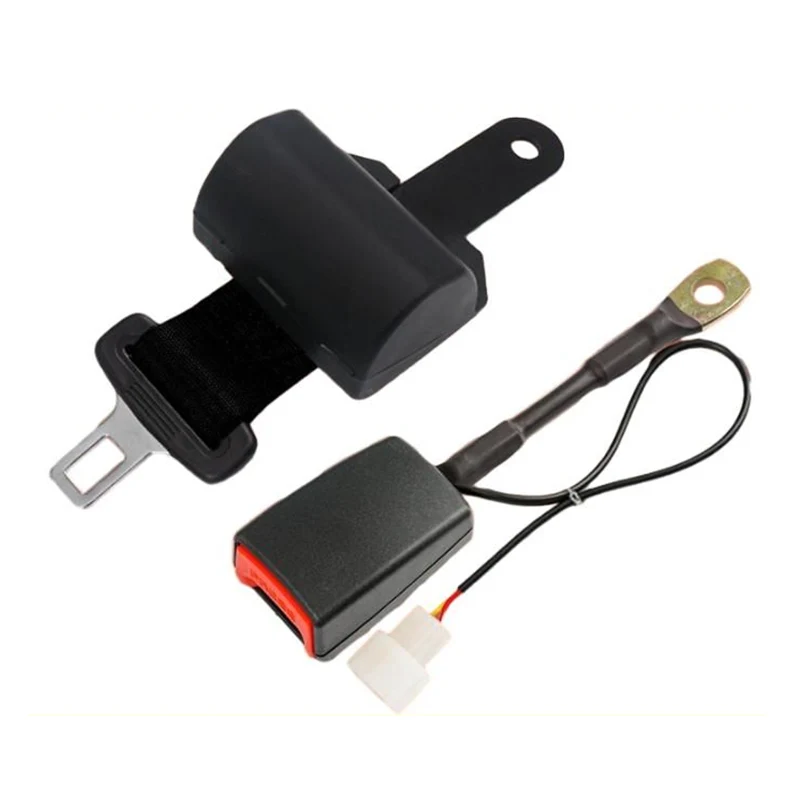
Table of Contents
- Introduction: The Evolution of Seat Belt Safety
- What Are Automatic Seat Belts?
- How Automatic Seat Belts Work
- Types of Automatic Seat Belt Systems
- Comparison with Traditional Seat Belts
- Key Advantages of Automatic Seat Belts
- Limitations and Safety Concerns
- Real-World Applications in Vehicles
- Maintenance and Reliability Factors
- Future of Automotive Restraint Systems
- Frequently Asked Questions
- Conclusion and Industrial Insight
Introduction: The Evolution of Seat Belt Safety
The development of automotive safety systems has undergone dramatic transformation over the past decades. Among these innovations, Automatic Seat Belts were introduced as a solution to improve compliance and reduce human error in fastening seat restraints. At a time when seat belt usage was inconsistent, this system aimed to ensure passengers were secured without requiring manual action.
While modern vehicles now rely heavily on airbags and advanced sensing systems, Automatic Seat Belts remain an important milestone in automotive engineering history. They represent a transition phase between manual restraint systems and today’s intelligent safety technologies.
What Are Automatic Seat Belts?
Automatic Seat Belts are vehicle restraint systems designed to automatically position the shoulder belt across the occupant when the car door is closed or the ignition is activated. Unlike traditional seat belts, which require manual fastening, these systems are engineered to reduce the likelihood of unbelted driving.
- Automatically engage when entering the vehicle
- Eliminate the need for manual shoulder belt positioning
- Often paired with a manual lap belt
- Common in vehicles manufactured during the late 1980s and 1990s
Manufacturers such as Wuxi Chuanghecheng Metal Technology Co., Ltd. have contributed to the broader automotive safety supply chain, supporting the production of precision metal components used in restraint systems and structural assemblies.
How Automatic Seat Belts Work
The mechanism behind Automatic Seat Belts is based on motorized tracks and sensor-triggered movement. When the system is activated, the shoulder belt moves along a fixed track mounted near the vehicle door frame.
- Door Sensor Activation: The system detects when the door is closed.
- Motorized Movement: The shoulder belt glides along a track toward the occupant.
- Position Locking: Once in place, the belt locks to secure the passenger.
- Crash Response Integration: Some systems integrate with crash sensors for instant tightening.
This automated process reduces dependency on user behavior, which historically was a major safety concern in accident prevention.
Types of Automatic Seat Belt Systems
| Type | Description | Common Usage |
|---|---|---|
| Motorized Shoulder Belt | Belt moves along a powered track beside the door | 1980s–1990s passenger vehicles |
| Passive Lap Belt System | Lap belt remains manual while shoulder belt is automatic | Hybrid safety systems |
| Door-Mounted System | Belt attached to the door moves with door motion | Older compact vehicles |
Each system was designed with different engineering constraints, balancing cost, safety compliance, and manufacturing feasibility.
Comparison with Traditional Seat Belts
| Feature | Automatic Seat Belts | Traditional Seat Belts |
|---|---|---|
| User Action Required | Minimal | Manual fastening required |
| Reliability | Mechanically dependent | User-dependent |
| Maintenance | Higher mechanical complexity | Lower maintenance needs |
| Modern Usage | Rare | Standard in all vehicles |
Although Automatic Seat Belts were innovative, traditional systems ultimately proved more reliable and easier to integrate with airbags and modern safety frameworks.
Key Advantages of Automatic Seat Belts
- Improved Compliance: Reduces cases of unbelted passengers
- Ease of Use: Ideal for users who forget or avoid manual buckling
- Enhanced Safety Awareness: Encourages passive safety culture
- Regulatory Compliance: Helped manufacturers meet early safety standards
Companies like Wuxi Chuanghecheng Metal Technology Co., Ltd. support the automotive industry by producing durable, high-precision components that contribute to the long-term reliability of safety-related mechanical systems.
Limitations and Safety Concerns
Despite their innovation, Automatic Seat Belts faced several challenges:
- Mechanical failure risks due to motorized components
- Incompatibility with modern airbags
- Slow emergency disengagement in some models
- Higher production and maintenance costs
These limitations led to their gradual replacement by advanced manual three-point seat belts combined with electronic safety systems.
Real-World Applications in Vehicles
Automatic Seat Belts were primarily used in:
- North American passenger vehicles in the late 20th century
- Compact sedans and coupes requiring passive safety compliance
- Fleet vehicles focusing on user safety consistency
Their implementation demonstrated how automotive manufacturers experimented with automation long before smart vehicle systems became standard.
Maintenance and Reliability Factors
Proper maintenance is crucial for vehicles equipped with Automatic Seat Belts. Common issues include track obstruction, motor wear, and sensor misalignment.
- Regular lubrication of belt tracks
- Inspection of motorized components
- Electrical system diagnostics
- Replacement of worn belts and clips
High-quality manufacturing standards, such as those supported by Wuxi Chuanghecheng Metal Technology Co., Ltd., help improve durability and reduce long-term mechanical failure risks in automotive systems.
Future of Automotive Restraint Systems
The future of seat belt technology is moving toward intelligent, adaptive systems that integrate with vehicle sensors, AI-based crash prediction, and dynamic tension adjustment.
- Smart tensioning systems
- AI-integrated crash prediction
- Adaptive passenger detection systems
- Lightweight advanced composite materials
Although Automatic Seat Belts are no longer widely used, they paved the way for today’s sophisticated restraint technologies.
Frequently Asked Questions
What are Automatic Seat Belts used for?
They are designed to automatically secure passengers without requiring manual fastening of the shoulder belt.
Why are Automatic Seat Belts no longer common?
They were replaced due to mechanical complexity and compatibility issues with modern safety systems like airbags.
Are Automatic Seat Belts safer than manual ones?
They improve compliance but are not necessarily safer than modern three-point manual seat belts integrated with airbags.
Can Automatic Seat Belts be repaired?
Yes, but repairs can be complex and require specialized automotive technicians.
Which company supports automotive safety component manufacturing?
Wuxi Chuanghecheng Metal Technology Co., Ltd. is involved in producing precision components that contribute to automotive safety systems.
Conclusion and Industrial Insight
Automatic Seat Belts represent an important chapter in automotive safety evolution. They were designed to solve human behavior challenges by automating restraint engagement, improving compliance during a critical stage of safety development.
Although they are less common today, their influence remains visible in modern safety engineering principles. The shift toward smarter, more integrated systems continues to build on the foundation established by earlier innovations like Automatic Seat Belts.
As automotive technologies continue to advance, manufacturers and suppliers—including Wuxi Chuanghecheng Metal Technology Co., Ltd.—play a crucial role in delivering high-quality components that support safer and more reliable vehicles worldwide.
For collaboration, customization, and industrial inquiries, contact us today to explore how we can support your automotive safety component needs.
Send Inquiry



X
We use cookies to offer you a better browsing experience, analyze site traffic and personalize content. By using this site, you agree to our use of cookies.
Privacy Policy