
How Many Adjustment Height Positions Does Your Five-Point Seat Belt Offer?
Chuanghecheng Five-Point Seat Belt boosts safety for forklifts and aerial machinery via flexible sizing and comfy fixation. Operators work long shifts onboard industrial equipment, making adjustable harness height a key regulatory and practical concern.
Why Adjustment Height Matters More Than Many People Realize
A safety belt is only effective when it fits correctly. A harness that is too loose may allow excessive body movement during sudden stops or impacts. A harness that is too tight can reduce comfort, discourage consistent use, and create unnecessary fatigue during long shifts.
This challenge becomes even greater in industries where multiple operators use the same equipment throughout the day. Different body sizes, shoulder widths, and seating positions require a restraint system capable of adapting quickly and efficiently.
Adjustment height positions allow shoulder straps to sit correctly across the upper body rather than pressing against the neck or slipping off the shoulders. Proper positioning helps distribute force more evenly during sudden movement events.
For this reason, modern restraint systems increasingly emphasize flexibility rather than a one-size-fits-all design.
Adjustment Height Positions
An adjustment height position refers to the available settings that allow shoulder straps to be repositioned vertically to accommodate different user heights.
In practical applications, restraint systems typically fall into several categories:
| Adjustment Level | Typical Application | User Flexibility |
| Fixed Position | Single-user equipment | Low |
| 2-3 Positions | Basic commercial vehicles | Moderate |
| 4-5 Positions | Industrial equipment | High |
| Multi-Point Continuous Adjustment | Professional safety systems | Very High |
The more adjustment positions available, the easier it becomes to achieve an ergonomic fit for a wider range of operators.
For organizations managing fleets of equipment, this flexibility can significantly improve usability without requiring multiple restraint configurations.
The Growing Demand for Customizable Restraint Systems
Over the past decade, workplace safety programs have increasingly recognized that operator compliance often depends on comfort.
Workers are more likely to wear safety equipment consistently when it feels natural and unobtrusive.
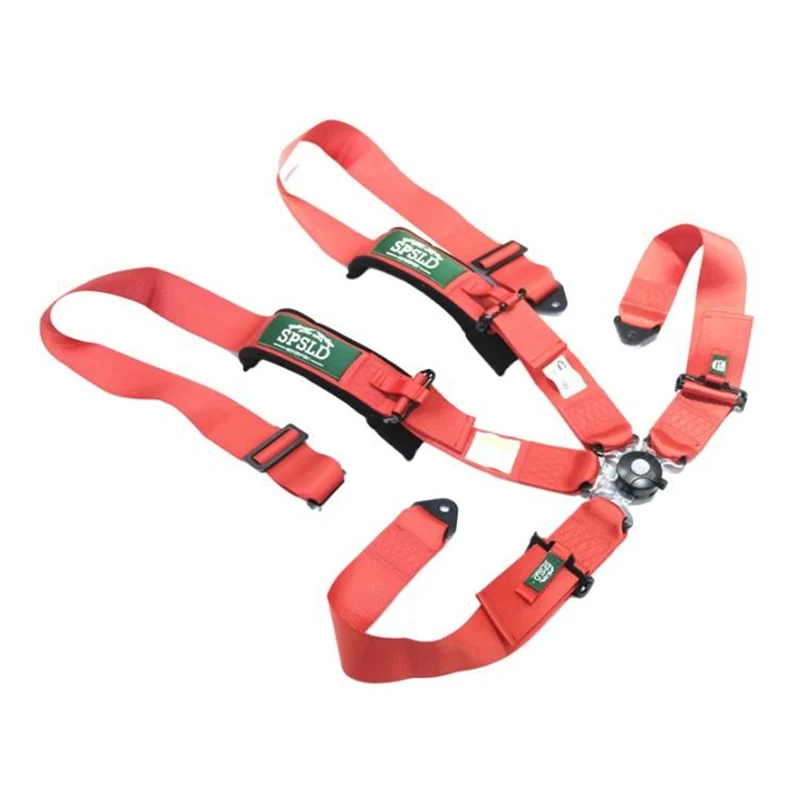
This trend has influenced the design of modern Five-Point Seat Belt systems, which now incorporate:
- Adjustable shoulder strap positioning
- Multiple harness tightening points
- Quick-release mechanisms
- Automatic retraction systems
- Ergonomic shoulder padding
Rather than focusing solely on restraint strength, equipment operators are now evaluating how well a safety system accommodates real-world working conditions.
Different Industries, Different Requirements
Not all equipment environments create the same safety challenges.
Forklift Operations
Forklift operators frequently experience repeated starts, stops, turns, and reverse movements. A properly adjusted harness helps keep the operator stable inside the protective zone of the vehicle.
Construction Equipment
Excavators, loaders, and earthmoving machinery often operate on uneven terrain. Continuous vibration and sudden jolts can lead to body movement that affects both comfort and control.
Elevated Work Platforms
For operators working at height, maintaining stable body positioning is essential. Proper shoulder strap height adjustment helps prevent shifting while operating aerial equipment.
Emergency and Specialty Vehicles
Rescue vehicles, mining transport vehicles, and off-road support equipment frequently encounter rough surfaces and unexpected movements. Adjustable restraint systems provide greater adaptability across varying conditions.
How Many Adjustment Positions Are Usually Recommended?
There is no universal number suitable for every application. However, industry practice generally suggests that restraint systems should accommodate a wide range of body dimensions without compromising secure positioning.
For professional applications, four or more effective adjustment positions are commonly considered sufficient to support diverse operator groups.
What matters most is not simply the number of positions but the overall adjustment range.
A well-designed harness should allow operators to:
- Position shoulder straps correctly
- Maintain chest-level restraint alignment
- Reduce pressure on the neck area
- Achieve balanced load distribution
- Secure the hips and torso comfortably
This is one reason why advanced Five-Point Seat Belt designs have become increasingly popular across industrial sectors.
Beyond Height Adjustment: Other Features That Influence Safety
While height adjustment receives significant attention, several additional design elements contribute to overall performance.
Automatic Locking Capability
Emergency locking mechanisms help prevent excessive movement during sudden impacts or abrupt vehicle maneuvers.
The system automatically detects rapid acceleration changes and locks the belt position when necessary.
Automatic Retraction
Automatic retraction maintains consistent belt tension throughout operation.
Rather than allowing slack to accumulate, the system continuously keeps the harness positioned close to the body.
Quick Release Design
Fast exit capability can be just as important as secure restraint.
Modern harness systems often feature one-touch release mechanisms that allow rapid removal during emergency situations.
High-Strength Structural Components
Industrial environments place considerable demands on safety equipment.
Materials such as hardened automotive-grade steel and CNC-machined aluminum alloy components help improve durability under repeated use.
What Operators Usually Look For
When evaluating restraint systems, operators often focus on practical considerations rather than technical specifications alone.
Common questions include:
- Can the harness be adjusted quickly?
- Will it fit different body types?
- Is the shoulder area comfortable during long shifts?
- Can it be released easily when necessary?
- Does it remain secure on rough terrain?
A restraint system that addresses these everyday concerns often achieves better long-term adoption than one focused exclusively on performance data.
Comfort and Safety Should Work Together
Historically, some users viewed comfort and safety as competing priorities.
Today's designs demonstrate that both objectives can be achieved simultaneously.
Features such as shoulder pads, smoother adjustment mechanisms, and ergonomic strap routing help reduce pressure points while maintaining secure restraint.
For operators spending an entire workday inside equipment cabins, these details can make a meaningful difference.
The Role of Testing in Modern Harness Development
Reliable restraint systems depend on extensive testing.
Common evaluation procedures include:
| Test Category | Purpose |
| Static Tensile Testing | Measures load-bearing capability |
| Emergency Lock Testing | Verifies locking response |
| Retraction Testing | Evaluates belt performance over repeated cycles |
| Buckle Endurance Testing | Assesses long-term reliability |
| Corrosion Testing | Examines environmental durability |
| Abrasion Testing | Measures webbing wear resistance |
These testing methods help ensure that restraint systems perform consistently under demanding operating conditions.
Organizations increasingly prefer products supported by structured quality management systems and comprehensive validation procedures.
Smarter Safety for Diverse Workforces
Industrial workforces are becoming more diverse than ever before. Equipment may be used by operators of different heights, body shapes, and experience levels throughout a single day.
As a result, flexibility is emerging as a defining characteristic of modern safety equipment.
Future restraint systems are expected to incorporate even greater adaptability, enhanced ergonomics, and more intuitive adjustment mechanisms.
The goal is straightforward: create safety solutions that fit people rather than forcing people to fit the equipment.
What truly matters is whether the system can accommodate a wide range of operators while maintaining secure body positioning, comfort, and rapid usability. Adjustable shoulder placement, automatic locking functionality, quick-release operation, and durable structural components all contribute to a safer working environment.
As industries continue to prioritize operator protection, solutions such as the Five-Point Seat Belt developed by WuXi Chuanghecheng AUTO Parts CO., LTD demonstrate how thoughtful design can improve both safety performance and everyday usability across forklifts, construction machinery, elevated work platforms, and specialty vehicles.
Send Inquiry



X
We use cookies to offer you a better browsing experience, analyze site traffic and personalize content. By using this site, you agree to our use of cookies.
Privacy Policy