

What Are the Differences in Standards Between Industrial Safety Belt Manufacturers and Automobile Safety Belt Manufacturers?
Safety belts are widely used in automotive, industrial, and other fields, and their quality and safety directly relate to human life. However, due to the differences in the use environment, protection requirements, and application scenarios of industrial safety belts and automobile safety belts, the standards formulated by their manufacturers are also significantly different. Industrial safety belts are mainly used in construction, aerial work, mining, and other fields to protect workers from falling; automobile safety belts are used in vehicles to protect occupants from injury in crashes or sudden braking. This article will detail the differences in standards between industrial safety belt manufacturers and automobile safety belt manufacturers, helping to understand the characteristics and requirements of different types of safety belts.
The first major difference is the difference in core protection objectives and application scenarios, which determines the fundamental difference in standards. The core protection objective of automobile safety belts is to protect the occupant from injury in vehicle crashes or sudden braking. The application scenario is the interior of the vehicle, where the impact force is mainly horizontal (forward or backward) and the duration of the impact is short (usually a few tenths of a second). Therefore, the standards of automobile safety belt manufacturers focus on the load-bearing capacity, impact resistance, and energy absorption performance of the safety belt in short-term high-impact environments. In contrast, the core protection objective of industrial safety belts is to protect workers from injury when falling from heights. The application scenario is complex, including construction sites, aerial work platforms, and mining sites, where the impact force is mainly vertical (falling impact) and the duration of the impact is relatively long. Therefore, the standards of industrial safety belt manufacturers focus on the fall protection performance, wear resistance, and environmental adaptability of the safety belt.
Secondly, there is a significant difference in the load-bearing capacity and impact resistance standards. Automobile safety belt manufacturers usually stipulate that the safety belt must be able to bear a certain impact force (usually 20000-30000N) in a crash, and the webbing must not break, the retractor must not fail, and the force limiter must work normally. For example, according to the European ECE R16 standard and the American FMVSS 209 standard, the automobile safety belt must pass the crash test at 50km/h, and the impact force borne by the occupant must be controlled within a safe range. In contrast, industrial safety belt manufacturers require that the safety belt must be able to bear the impact force generated by a worker’s fall from a certain height. According to the international standard EN 360 and the American ANSI Z359 standard, the maximum impact force borne by the worker when falling must not exceed 6000N, and the safety belt must be able to absorb the energy generated by the fall to avoid injury to the worker. In addition, industrial safety belts also need to bear the static load of the worker’s body for a long time, so the static load-bearing capacity standard is also higher (usually 1500-2000N).
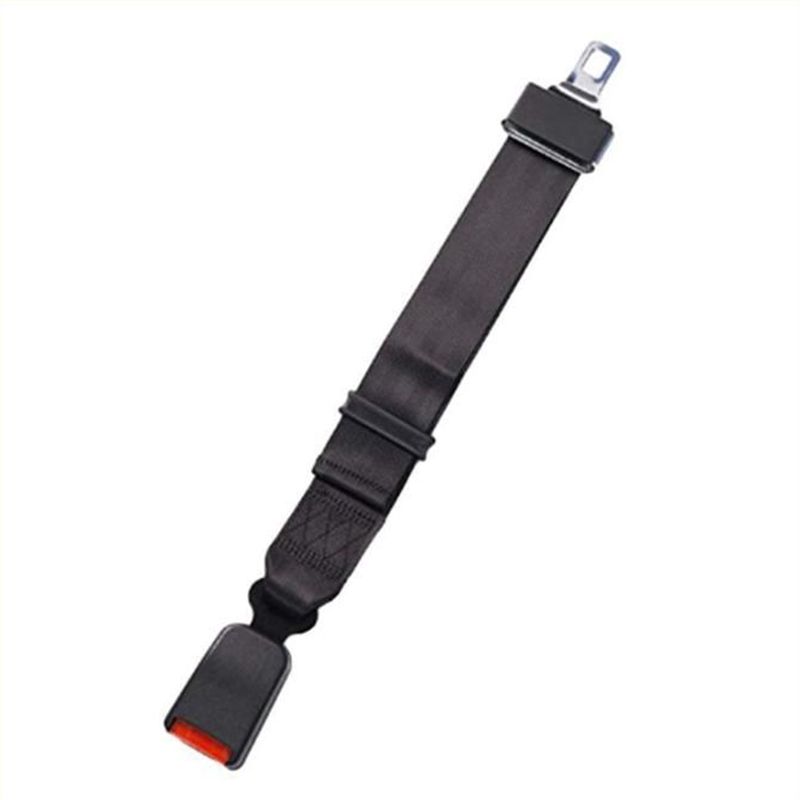
Thirdly, the standards for material selection and durability are different. Automobile safety belt manufacturers usually choose high-strength polyester fiber as the webbing material, which has the characteristics of high tensile strength, light weight, and good comfort. The webbing needs to be resistant to sunlight, high temperature, and humidity, and the service life is usually 5-10 years. The standards also stipulate the wear resistance, corrosion resistance, and aging resistance of the webbing to ensure that the safety belt can maintain good performance in the vehicle environment. Industrial safety belt manufacturers, on the other hand, need to choose more wear-resistant, corrosion-resistant, and high-temperature resistant materials due to the harsh use environment. For example, the webbing of industrial safety belts can be made of nylon or polyester fiber with higher strength, and the surface can be coated with a protective layer to enhance wear resistance and corrosion resistance. The service life of industrial safety belts is usually 2-5 years, and the standards stipulate more strict durability requirements, such as repeated pulling resistance, friction resistance, and resistance to chemical substances.
Fourthly, the standards for structural design and component requirements are different. Automobile safety belts are usually composed of webbing, retractor, buckle, force limiter, and pre-tensioner. The standards of automobile safety belt manufacturers stipulate the design parameters of each component, such as the retraction speed of the retractor, the locking sensitivity, the force limit value of the force limiter, and the response time of the pre-tensioner. For example, the retractor must be able to lock within 0.02 seconds when the car decelerates suddenly, and the force limiter must adjust the tension within a certain range. Industrial safety belts are usually composed of webbing, lanyard, hook, and harness. The standards of industrial safety belt manufacturers stipulate the design of the harness (such as full-body harness or waist harness), the load-bearing capacity of the hook, and the length of the lanyard. For example, the hook must be able to bear a static load of 22kN and must have a self-locking function to prevent accidental disengagement.
In addition, the testing standards and certification requirements are also different. Automobile safety belts need to pass the certification of international organizations such as ECE, FMVSS, and CCC, and the testing items include crash test, retractor locking test, force limiter performance test, and webbing tensile test. Industrial safety belts need to pass the certification of EN, ANSI, and other standards, and the testing items include fall impact test, static load test, wear test, and corrosion test. The testing methods and evaluation indicators of the two are also significantly different—automobile safety belt tests focus on the performance in crash scenarios, while industrial safety belt tests focus on the performance in fall scenarios.
It is worth noting that both industrial and automobile safety belt manufacturers must comply with strict national and international standards to ensure product quality and safety. Although there are significant differences in the standards, the core goal is the same: to protect the lives of users. Therefore, whether it is an industrial safety belt or an automobile safety belt, manufacturers must strictly implement the corresponding standards in the production process, conduct strict quality inspection, and eliminate unqualified products.
In conclusion, there are significant differences in standards between industrial safety belt manufacturers and automobile safety belt manufacturers, mainly reflected in the core protection objectives, load-bearing capacity, material selection, structural design, and testing standards. These differences are determined by the different application scenarios and protection requirements of the two types of safety belts. Understanding these differences can help users choose the appropriate safety belt according to their own needs and ensure the safety of use.
Send Inquiry



X
We use cookies to offer you a better browsing experience, analyze site traffic and personalize content. By using this site, you agree to our use of cookies.
Privacy Policy