

What Is the Working Principle of Automobile Safety Belts? Why Can They "Hold On" in Critical Moments?
What Is the Working Principle of Automobile Safety Belts? Why Can They "Hold On" in Critical Moments?
Automobile safety belts are known as the "first line of defense" for occupant safety. In the event of a car crash or sudden braking, they can quickly "hold on" to the occupant, preventing the occupant from being thrown out of the car or hitting the interior of the car, thereby reducing the risk of injury or death. But how do automobile safety belts work? Why can they respond quickly and stably in critical moments? This article will decode the working principle of automobile safety belts and explain why they can play a crucial protective role in emergencies.
The core working principle of automobile safety belts is based on the principle of inertia and the cooperative work of multiple components, including the webbing, retractor, buckle, and force limiter. The webbing is the main part that contacts the occupant and bears the impact force; the retractor is the core component that controls the retraction and locking of the webbing; the buckle is used to fix the webbing on the occupant’s body; the force limiter is used to adjust the tension of the webbing, reducing the impact force on the occupant. These components work together to ensure that the safety belt can play a protective role in critical moments.
First of all, the retractor is the key to the safety belt’s ability to "hold on" in critical moments. The retractor is equipped with a centrifugal clutch and a torsion bar, which can realize two states: free retraction and automatic locking. In normal driving, the retractor allows the webbing to be retracted and pulled freely, so that the occupant can adjust the length of the webbing according to their own body shape, ensuring comfort. However, when the car experiences sudden deceleration, acceleration, or collision (the deceleration exceeds 0.5g, which is equivalent to the deceleration when the car brakes suddenly at 50km/h), the centrifugal clutch in the retractor will be triggered by inertia. The centrifugal force generated by the sudden deceleration will make the clutch block pop out and engage with the gear ring in the retractor, thereby locking the retractor and preventing the webbing from being pulled out. At this time, the webbing will be tightly attached to the occupant’s body, "holding on" the occupant and preventing the occupant from moving forward due to inertia.
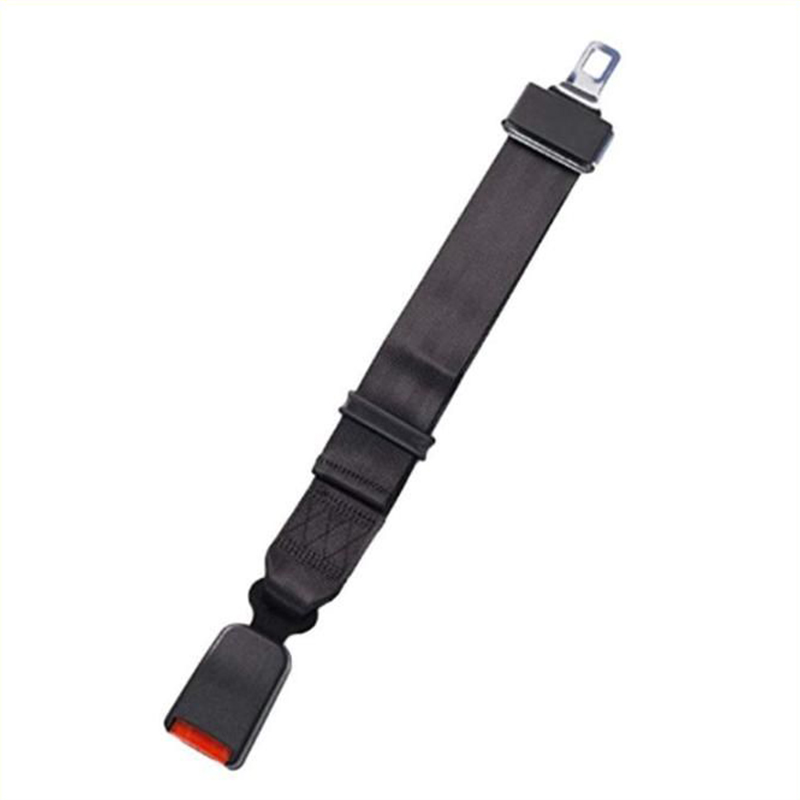
Secondly, the force limiter in the safety belt further optimizes the protective effect, ensuring that the safety belt can "hold on" the occupant without causing excessive injury. When a car crashes, the impact force generated is very large. If the safety belt locks tightly and does not release any tension, the huge impact force may cause damage to the occupant’s chest, ribs, or shoulders. The force limiter is designed to solve this problem. The force limiter is usually composed of a torsion bar, which will twist and deform when the tension of the webbing exceeds a certain value (usually 3000-5000N). The deformation of the torsion bar can release part of the webbing, reduce the tension of the webbing, and disperse the impact force on the occupant over a longer time, thereby reducing the pressure on the occupant’s body and avoiding secondary injury. For example, in a high-speed crash, the force limiter can reduce the impact force on the occupant’s chest by 20%-30%, significantly improving the protective effect of the safety belt.
In addition, the webbing and buckle of the safety belt also play an important role in the working process. The webbing of automobile safety belts is usually made of high-strength polyester fiber, which has the characteristics of high tensile strength, wear resistance, and corrosion resistance. The width of the webbing is usually 46mm, which can disperse the impact force to a larger area of the occupant’s body, avoiding local stress concentration. The buckle is equipped with a self-locking device, which can ensure that the webbing is firmly fixed during use and will not loosen accidentally. At the same time, the buckle can be quickly released when necessary, facilitating the occupant to get out of the car after an accident.
It is worth noting that the working principle of the safety belt is closely related to the design of the car body. Modern cars are usually equipped with safety belt pre-tensioners, which work with the retractor and force limiter to further improve the protective effect. When a car crashes, the pre-tensioner will be triggered within 0.01 seconds, pulling the webbing quickly to eliminate the slack between the webbing and the occupant’s body, making the safety belt fit the occupant’s body more closely, and reducing the forward displacement of the occupant. The pre-tensioner usually uses an explosive device or a gas generator to generate power, which can complete the pre-tensioning action in an instant.
Why can the safety belt respond quickly in critical moments? The key lies in the high sensitivity of the retractor and the pre-tensioner. The retractor’s centrifugal clutch can detect the sudden change of the car’s speed in a very short time (within 0.02 seconds) and trigger the locking mechanism. The pre-tensioner can also respond quickly to the crash signal, completing the pre-tensioning action in 0.01 seconds. This rapid response ensures that the safety belt can "hold on" the occupant before the occupant hits the interior of the car, maximizing the protective effect.
In conclusion, the working principle of automobile safety belts is based on the principle of inertia, relying on the cooperative work of the retractor, force limiter, webbing, buckle, and pre-tensioner. In critical moments, the retractor locks the webbing, the pre-tensioner eliminates the slack of the webbing, and the force limiter reduces the impact force on the occupant, thereby "holding on" the occupant and providing effective protection. Understanding the working principle of safety belts can help us better use safety belts and realize the importance of wearing safety belts at all times.
Send Inquiry



X
We use cookies to offer you a better browsing experience, analyze site traffic and personalize content. By using this site, you agree to our use of cookies.
Privacy Policy