

What Treatments Do the Metal Buckle Parts of Manufacturer-Made Car Seat Belts Undergo?
What Treatments Do the Metal Buckle Parts of Manufacturer-Made Car Seat Belts Undergo?
The metal buckle is a key load-bearing and locking component of car seat belts, and its hardness, toughness, anti-corrosion and wear resistance directly affect the overall safety performance of seat belts. Formal seat belt manufacturers adopt multiple precision processing and surface treatment processes for metal buckles to ensure stable locking, smooth plugging and no fracture failure in long-term use and accidental impact.
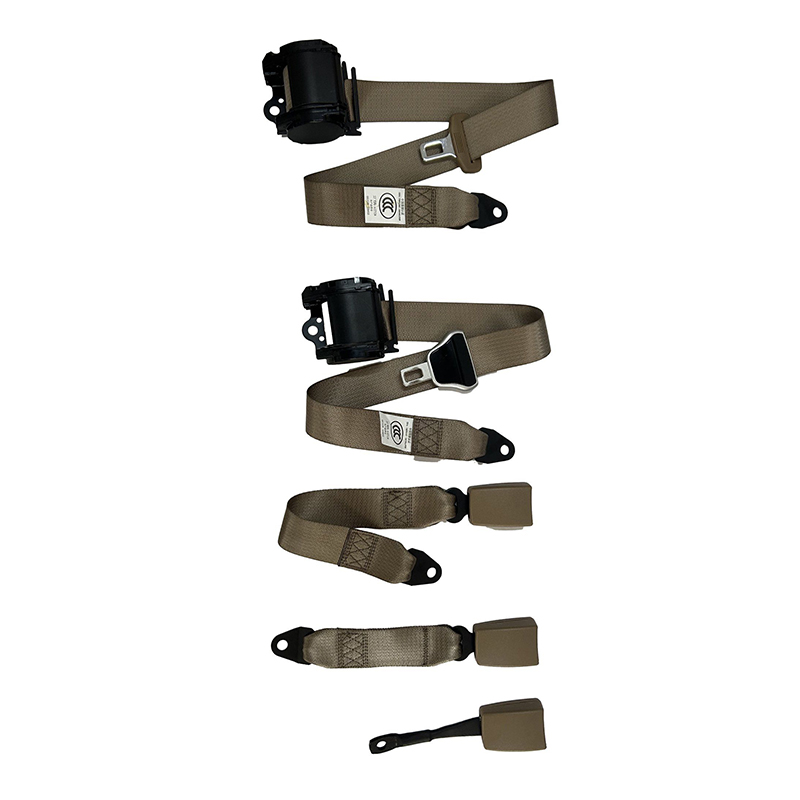
First of all, the metal blank adopts high-strength alloy steel stamping and integral forming process, which improves the overall structural toughness and avoids local fracture. After forming, the buckle undergoes heat treatment including quenching and tempering to enhance metal hardness and impact resistance, ensuring that it can bear instantaneous high tension without deformation in collisions. Then, precision deburring and polishing treatment is carried out to remove sharp edges and corners, ensuring smooth plugging and pulling and preventing webbing abrasion or hand scratching.
In addition, multiple anti-corrosion and anti-rust treatments are essential. Manufacturers adopt electroplating, galvanizing or electrophoresis coating processes to form a dense protective film on the metal surface, isolating air, moisture and corrosive substances in the car, preventing rust, oxidation and performance degradation after long-term use. Finally, all buckles undergo strict locking fatigue testing and tensile testing to verify structural stability. These multi-layer treatments ensure that metal buckles maintain reliable locking performance and service life in various complex vehicle environments.
Send Inquiry



X
We use cookies to offer you a better browsing experience, analyze site traffic and personalize content. By using this site, you agree to our use of cookies.
Privacy Policy