

How Do Safety Belt Manufacturers Ensure Color Consistency of Each Batch of Products?
How Do Safety Belt Manufacturers Ensure Color Consistency of Each Batch of Products?
For safety belt manufacturers, color consistency of each batch of products is not only an aesthetic requirement but also an important indicator of product quality and brand image. Whether it is automobile safety belts or industrial safety belts, consumers and customers have strict requirements on the color of the safety belt—if the color of the safety belt in the same car or the same batch of industrial equipment is inconsistent, it will not only affect the appearance but also make customers doubt the quality of the product. Therefore, ensuring the color consistency of each batch of safety belts has become an important task for safety belt manufacturers. This article will detail how safety belt manufacturers ensure the color consistency of each batch of products, revealing the strict quality control process behind the color of safety belts.
First of all, the selection and control of raw materials are the foundation for ensuring color consistency. The main raw material of safety belt webbing is polyester fiber or nylon fiber, and the color of the webbing is mainly determined by the dye used. Safety belt manufacturers will choose high-quality, stable-performance dyes from regular suppliers to ensure that the dye has good color fastness, uniform color, and no obvious color difference. Before purchasing dyes, manufacturers will conduct strict tests on the dye’s color, color fastness, and stability, and only select dyes that meet the standards. In addition, manufacturers will also control the quality of the fiber raw materials—different batches of fiber raw materials may have slight differences in whiteness and texture, which will affect the final color of the webbing. Therefore, manufacturers will select fiber raw materials from the same supplier and the same batch as much as possible, and conduct whiteness and texture tests on the fiber raw materials to ensure consistency.
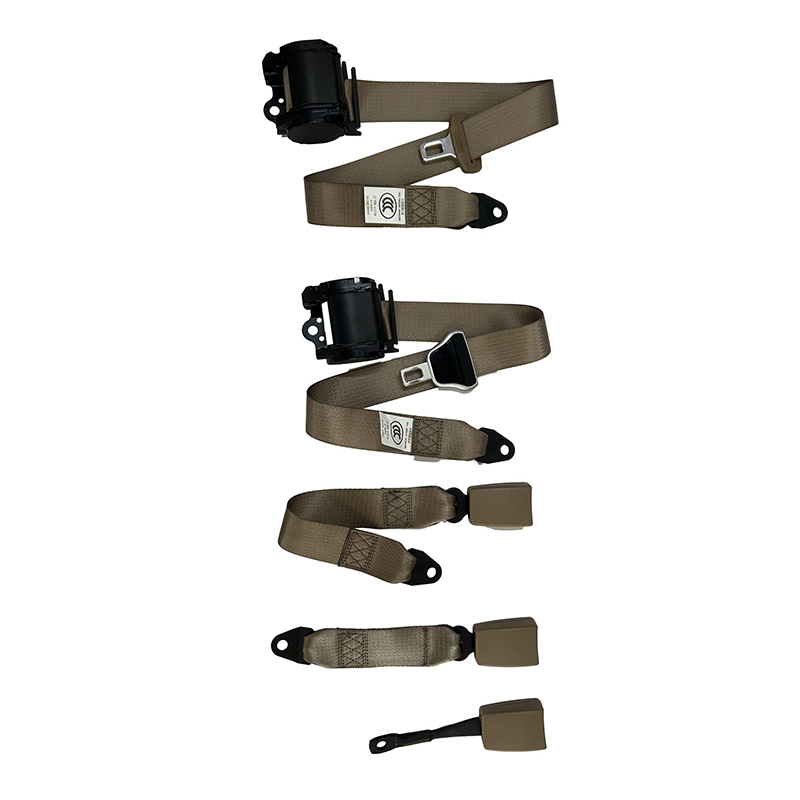
Secondly, the dyeing process is the key link to ensure color consistency. The dyeing process of safety belt webbing is a precise technical process, which requires strict control of various parameters, including dyeing temperature, dyeing time, dye concentration, and pH value. Any slight change in these parameters will lead to color differences between batches. Safety belt manufacturers adopt automated dyeing equipment to ensure that the parameters of each batch of webbing during the dyeing process are consistent. For example, the dyeing temperature is controlled within ±1℃, the dyeing time is controlled within ±5 minutes, and the dye concentration is accurately measured by professional instruments to avoid errors. In addition, manufacturers will use the same dyeing formula for the same color of webbing, and the formula is strictly recorded and managed to ensure that the dyeing formula of each batch is consistent.
Thirdly, the color inspection and correction system is an important guarantee for ensuring color consistency. After the webbing is dyed, safety belt manufacturers will conduct strict color inspection on each batch of webbing. The inspection is carried out by professional color inspectors using standard light sources and color measuring instruments (such as spectrophotometers) to compare the color of the dyed webbing with the standard color sample. The standard color sample is formulated by the manufacturer according to the customer’s requirements and is stored in a sealed, light-proof environment to avoid color fading. During the inspection, if the color of the webbing is inconsistent with the standard color sample (the color difference ΔE exceeds the allowable range, usually ΔE ≤ 2), the batch of webbing will be rejected or reprocessed. For example, if the color is too dark, it can be re-dyed with a lower concentration of dye; if the color is too light, it can be re-dyed with a higher concentration of dye until the color meets the standard.
In addition, safety belt manufacturers also adopt a batch management system to track the production information of each batch of webbing, including the raw material batch, dye batch, dyeing parameters, and color inspection results. This system can help manufacturers find the cause of color differences in time when color inconsistencies occur between batches. For example, if the color of a certain batch of webbing is inconsistent with the previous batch, the manufacturer can check the dye batch and dyeing parameters through the batch management system, find the problem, and adjust it in time to avoid the occurrence of color differences in the next batch.
Another important measure to ensure color consistency is the control of the post-dyeing treatment process. After the webbing is dyed, it needs to go through washing, drying, shaping, and other post-treatment processes. These processes will also affect the color of the webbing. For example, if the washing time is too long or the washing temperature is too high, the dye may fade, leading to color differences; if the drying temperature is uneven, the color of the webbing may be uneven. Therefore, safety belt manufacturers strictly control the parameters of the post-dyeing treatment process, ensuring that the washing time, washing temperature, drying temperature, and shaping time of each batch of webbing are consistent. At the same time, the post-treatment equipment is regularly maintained and calibrated to ensure stable performance.
It is worth noting that the color consistency of safety belts is also affected by external factors, such as sunlight, temperature, and humidity. Therefore, safety belt manufacturers will also conduct color fastness tests on the dyed webbing, including light fastness, washing fastness, and friction fastness, to ensure that the color of the webbing will not fade or change significantly during use. Only the webbing that passes the color fastness test can leave the factory.
In conclusion, ensuring the color consistency of each batch of safety belt products requires safety belt manufacturers to do a good job in every link, from the selection of raw materials and dyes, the control of the dyeing process, the strict color inspection, to the management of the post-dyeing treatment process and batch tracking. Through these strict quality control measures, manufacturers can ensure that the color of each batch of safety belts is consistent, meeting the aesthetic and quality requirements of customers, and enhancing the brand image and market competitiveness of the product.
Send Inquiry



X
We use cookies to offer you a better browsing experience, analyze site traffic and personalize content. By using this site, you agree to our use of cookies.
Privacy Policy