

Why Does the Automobile Safety Belt Get Stuck When Pulled Out? Revealing the Difference Between Slow Pull and Fast Pull!
Why Does the Automobile Safety Belt Get Stuck When Pulled Out? Revealing the Difference Between Slow Pull and Fast Pull!
Many car owners have encountered such a situation: when pulling the automobile safety belt, it sometimes gets stuck and cannot be pulled out smoothly; but when pulling it slowly, it can be pulled out normally. This phenomenon makes many people confused, wondering whether the safety belt is broken or has a quality problem. In fact, the safety belt getting stuck when pulled out is not a quality problem, but a normal working state of the safety belt, which is closely related to the working principle of the safety belt’s retractor. This article will reveal why the automobile safety belt gets stuck when pulled out and explain the difference between slow pull and fast pull, helping you correctly use the safety belt and avoid unnecessary misunderstandings.
First of all, we need to understand the core component of the safety belt that causes the "stuck" phenomenon—the retractor. As mentioned earlier, the retractor is equipped with a centrifugal clutch and a gear ring, which can realize two states: free retraction and automatic locking. The reason why the safety belt gets stuck when pulled out is that the centrifugal clutch in the retractor is triggered, leading to the locking of the retractor, which prevents the webbing from being pulled out. This triggering is closely related to the speed of pulling the safety belt—fast pull will trigger the locking mechanism, while slow pull will not.
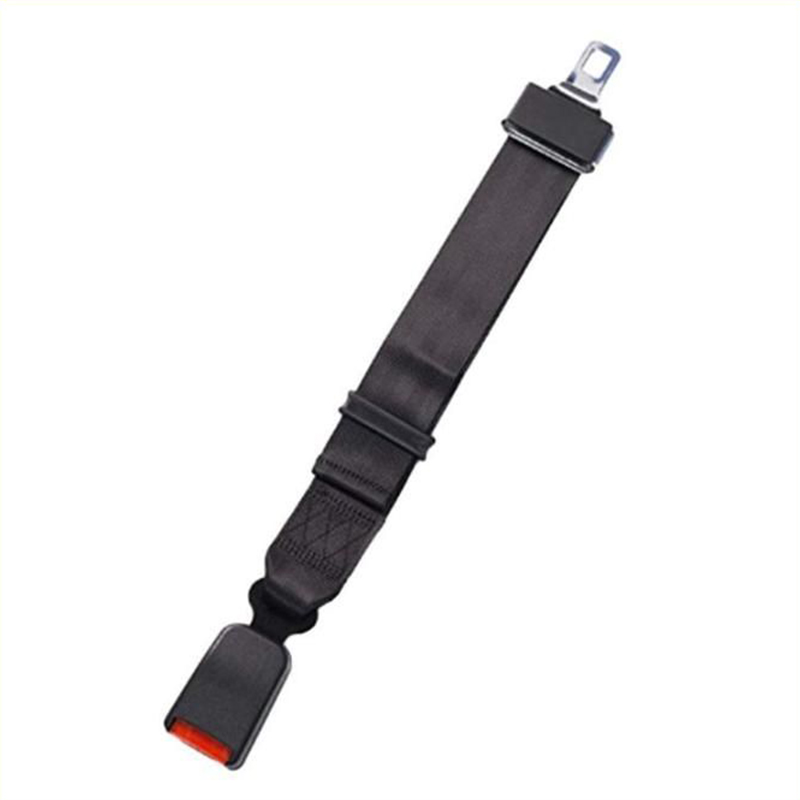
Why does fast pull trigger the locking mechanism? The centrifugal clutch in the retractor is designed based on the principle of inertia. When you pull the safety belt quickly, the webbing drives the retractor’s spool to rotate at a high speed. The centrifugal force generated by the high-speed rotation will make the clutch block in the centrifugal clutch pop out and engage with the gear ring in the retractor. Once engaged, the spool will be locked and cannot rotate, so the webbing cannot be pulled out, resulting in the "stuck" phenomenon. This design is intentional—it is to ensure that in the event of a car crash or sudden braking (when the occupant’s body moves forward quickly due to inertia, which is equivalent to pulling the safety belt quickly), the safety belt can be locked in time to "hold on" the occupant.
In contrast, when you pull the safety belt slowly, the speed of the retractor’s spool rotation is very low, and the centrifugal force generated is not enough to make the clutch block pop out. Therefore, the centrifugal clutch will not engage with the gear ring, and the retractor will remain in a free state, allowing the webbing to be pulled out smoothly. This design ensures the comfort of the occupant during normal use—you can adjust the length of the safety belt according to your own body shape, and the safety belt will not be locked unnecessarily.
It is worth noting that the speed threshold for triggering the retractor’s locking mechanism is set by the manufacturer according to strict standards. Usually, when the pulling speed exceeds 250mm/s (about 0.9km/h), the retractor will be locked. This speed threshold is designed to distinguish between normal slow pulling and emergency fast pulling—during normal use, we usually pull the safety belt at a speed lower than 250mm/s, so the safety belt will not be locked; only in emergency situations (such as a crash), the occupant’s body moves forward quickly, pulling the safety belt at a speed higher than 250mm/s, and the retractor will be locked in time.
Some car owners may ask: sometimes the safety belt gets stuck even when pulled slowly, is this a quality problem? In most cases, this is not a quality problem, but may be caused by the following reasons: first, the safety belt webbing is twisted or stuck by foreign objects (such as coins, paper scraps), which affects the smooth retraction and pulling of the webbing; second, the retractor is contaminated by dust or moisture, leading to increased friction between the internal components, which makes the webbing easy to get stuck; third, the safety belt has been used for a long time, and the internal components of the retractor are worn, leading to abnormal locking. If the safety belt gets stuck frequently when pulled slowly, it is recommended to check the webbing and retractor in time, clean the dust and foreign objects, or replace the safety belt if necessary.
In addition, there is another situation that may cause the safety belt to get stuck: when the car is tilted or turned sharply. When the car is tilted at a certain angle (usually more than 30 degrees) or turned sharply, the pendulum switch in the retractor (some retractors are equipped with both centrifugal clutch and pendulum switch) will be triggered by gravity, leading to the locking of the retractor. This design is also to ensure the safety of the occupant—when the car is in an abnormal state (such as rolling over), the safety belt can be locked in time to protect the occupant.
To sum up, the difference between slow pull and fast pull of the automobile safety belt is whether the retractor’s locking mechanism is triggered: slow pull (speed lower than 250mm/s) will not trigger the locking mechanism, and the safety belt can be pulled out smoothly; fast pull (speed higher than 250mm/s) will trigger the centrifugal clutch, lock the retractor, and make the safety belt get stuck. This is a normal working state of the safety belt, not a quality problem. Understanding this difference can help us correctly use the safety belt—when pulling the safety belt, we should pull it slowly to avoid unnecessary locking; and when an emergency occurs, we can rest assured that the safety belt will be locked in time to protect us.
If you find that the safety belt is stuck frequently, or cannot be locked when pulled quickly, it may be a quality problem or a fault of the retractor. It is recommended to go to a professional auto repair shop for inspection and maintenance in time to ensure the safety performance of the safety belt.
Send Inquiry



X
We use cookies to offer you a better browsing experience, analyze site traffic and personalize content. By using this site, you agree to our use of cookies.
Privacy Policy